
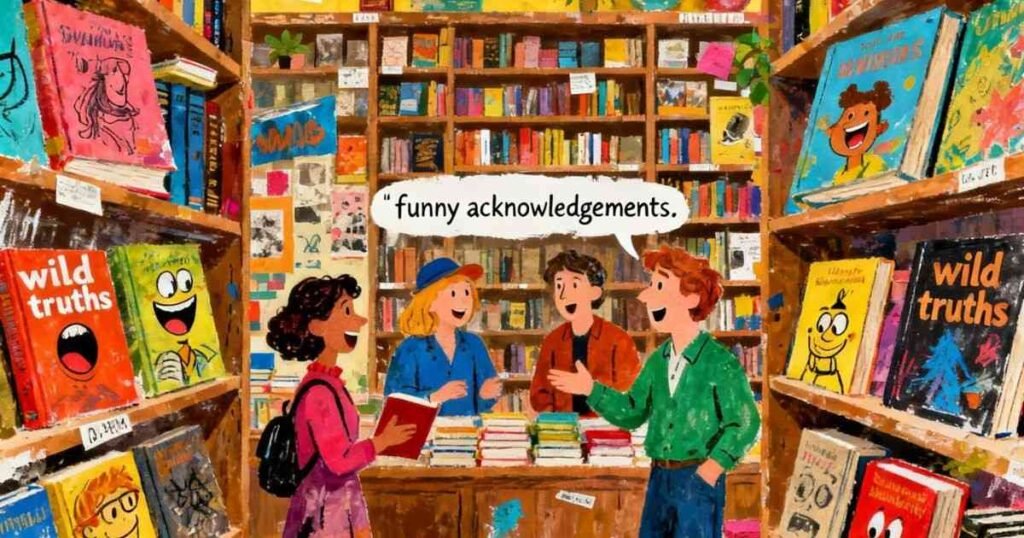
Meaning of Funny acknowledgements in books
Why funny acknowledgements in books matter
Funny acknowledgements in books matter because they display the human side of writing. They help readers realize that a real person went through the process of writing a book, struggling, laughing, failing, and surviving. Using funny acknowledgements allows the writer to break the serious tone and connect with the reader instantly. The lines in these acknowledgements make the reader laugh before or after a sad book. Funny acknowledgements in books also help the writer feel connected and not perfect. They express gratitude in a humorous way rather than in a serious and boring manner.
Some readers even read the acknowledgement section in the book only to read the funny acknowledgements in books. This section helps build a bond between the reader and the writer. Funny acknowledgements also make the book memorable. People share screenshots and quote lines from the book and talk about the funny acknowledgements in books. This is a free form of promotion. Using funny acknowledgements in books also displays confidence and creativity. The writer must be confident and creative enough to make fun of the stress and chaos they went through.
Purpose of funny acknowledgements in books
The purpose of funny acknowledgements in books is to thank the people without appearing robotic. Writing a book is a very stressful, exhausting, and emotional experience. Funny acknowledgements in books help the writer relieve the tension in a humorous manner. They help the writer express gratitude to the editors, friends, family, and even the coffee cups in a humorous manner. This makes the writer appear genuine. Another purpose of funny acknowledgements in books is to leave the reader in a good mood.
Sometimes, after reading a serious book or a very long book, a dash of humor in the acknowledgements is very welcome. Funny acknowledgements in books also give the writer a chance to be himself. The reader gets a glimpse of the writer behind the book. This makes the writer appear genuine. Funny acknowledgements in books also help the writer gain the loyalty of the reader. When the reader chuckles at the acknowledgements, they tend to remember the writer. Funny acknowledgements in books turn a thank you into a joyous occasion. Their purpose is to connect, relieve, and be honest in a humorous manner.
Must Read: Putlockers: Exposes hidden dangers before you click
Power of Funny acknowledgements in books
Emotional impact of funny acknowledgements in books
Funny acknowledgements in books do something very simple but very powerful. They make readers feel good instantly. Most people open a book expecting boring thank you lines, formal names, and serious tone. When they see humorous acknowledgements in books instead, it feels refreshing. It feels real. That small laugh creates comfort and ease. Readers feel like the author is a normal human, not a distant voice. Funny acknowledgements also create emotional warmth. Humor softens the mind and lowers emotional guards. A relaxed reader is more open to the story.
That is why funny acknowledgements in books quietly improve the reading experience. They also create connection. A joke about late nights, family chaos, or coffee addiction feels relatable. Readers think, this author gets me. Funny acknowledgements in books also stay in memory longer. People forget serious lines but remember laughter. Emotionally, humor builds trust, positivity, and attachment. That emotional spark makes funny acknowledgements in books more than just thanks. They become a moment of shared feeling between reader and writer.
Humor psychology in funny acknowledgements in books
The psychology behind humorous acknowledgements in books is deeply human. The brain loves surprise, and humor works because it breaks expectations. When readers expect dull gratitude and see funny acknowledgements, the brain reacts with pleasure. That pleasure builds instant liking. Humor also signals confidence. Authors who use funny acknowledgements in books appear comfortable with themselves. This makes readers trust them more. Psychologically, laughter creates bonding. Funny acknowledgements feel like a private joke shared with the reader.
This creates closeness and emotional connection. Humor also improves attention and memory. The brain remembers things that make it smile. That is why funny acknowledgements stand out even years later. They also reduce stress. A relaxed mind is more focused and curious. From a psychology view, funny acknowledgements in books set the tone of the book before it even starts. They prepare the reader emotionally and mentally. This makes the reading journey feel lighter, more enjoyable, and more personal.
Viral Funny acknowledgements in books
Famous funny acknowledgements in books
- Why they stay with readers: Funny acknowledgements are unexpected, and that surprise is what makes people laugh without even trying.
- Authors being themselves: Famous funny acknowledgements in books break the formal tone and are like a real person speaking.
- Laughing at the struggle: Funny acknowledgements in books make fun of deadlines, rewrites, and almost quitting.
- Moments from everyday life: Talking about noisy households, sleep deprivation, and too much coffee is very relatable.
- Comfort in imperfections: Authors using funny acknowledgements show that they are not trying to be perfect.
- Breaking the rules of the usual formal tone: These acknowledgements go against the formal tone and are casual and relaxed.
- Success with honesty: Funny acknowledgements in books show readers that success is still accompanied by stress and chaos.
- Memorable moments for readers: Many people remember funny acknowledgements more than the story itself.
- Influence on new writers: Famous funny acknowledgements inspire new writers to be honest and funny.
Popular funny acknowledgements in books examples
- Simple humor feels real: Popular funny acknowledgements in books work because they sound natural, not forced.
- Thanking odd things: Funny acknowledgements often thank coffee, snacks, or even procrastination.
- Friendly teasing: Authors joke about friends, editors, or family in a loving way.
- Honest frustration: Funny acknowledgements admit that writing was exhausting and stressful.
- Shared experiences: Readers laugh because they recognize the same struggles in their own lives.
- Short lines hit harder: Many popular funny acknowledgements use just one clever sentence.
- Light exaggeration: Small problems are stretched slightly to make them funnier.
- Relaxing the mood: Funny acknowledgements help readers ease into emotional stories.
- Easy to share: These lines go viral because they feel personal and screenshot worthy.
- Making readers feel close: Popular funny acknowledgements in books feel like an inside joke shared with the reader.
Truths in Funny acknowledgements in books
Humorous acknowledgments in books are more than just some laughs at the start of a story; they are also a revelation of the truth about the process of writing a book and the life of an author. Behind every joke about staying up late, coffee, and family life, there is a struggle that the reader never gets to see. These acknowledgments are honest about deadlines, rewrites, and self-doubt, but they place all of this in a fun and humorous perspective. They show that even successful authors face challenges and weaknesses, making them more human.
Humorous acknowledgments in books also illustrate the small things that keep authors going, such as snacks, music, and small breaks that are meaningless but very significant. Humor in this instance is a bridge that connects the reader to the author and shows the real work that goes into a book. They teach patience, perseverance, and humility by showing that mistakes and struggles are normal. Behind every joke, humorous acknowledgments in books show gratitude, truth, and life lessons, making the start of a story not only fun but also meaningful, relatable, and inspiring.
Formal vs Funny acknowledgements in books
Here’s a clear comparison to understand the difference between formal and funny acknowledgements in books:
| Aspect | Formal Acknowledgements | Funny Acknowledgements |
|---|---|---|
| Tone | Serious, polite, and professional | Lighthearted, playful, humorous |
| Language | Polished, structured, traditional | Casual, simple, sometimes exaggerated |
| Purpose | To show respect and gratitude formally | To entertain while showing gratitude and personality |
| Emotional Impact | Creates respect and professionalism | Creates connection, warmth, and relatability |
| Memorability | Often forgettable unless very unique | Often memorable because of humor and surprise |
| Reader Connection | Limited personal connection | Builds instant connection and likability |
| Examples | “I sincerely thank my editor and family for their support.” | “Thanks to coffee, late nights, and my cat for not judging me while I wrote.” |
| Effect on Tone of Book | Keeps the book serious and formal | Sets a relaxed, engaging, and fun tone before the story begins |
| Creativity Allowed | Low; usually follows traditional norms | High; authors can be playful, sarcastic, or witty |
| Overall Impression | Professional and polite | Fun, relatable, and memorable |
Marketing Power of Funny acknowledgements in books
SEO benefits of funny acknowledgements in books
Funny acknowledgements in books quietly help with SEO in ways most writers never plan. Readers love sharing humorous acknowledgements in books on blogs, Goodreads, Reddit, and social media posts. Every share creates fresh mentions and natural backlinks. These organic mentions help books appear more in search results. Funny acknowledgements in books also increase dwell time. When readers laugh, they stay longer on pages discussing the book. Search engines notice that behavior.
Humor makes content screenshot worthy, which leads to reposts, captions, and quote style content online. That repeated sharing keeps funny acknowledgements searchable for months or even years. Bloggers and reviewers often highlight them in reviews, adding more indexed content around the book. Even casual searches like “funniest book acknowledgements” pull traffic. Funny acknowledgements also help with brand building. An author known for humor becomes searchable by name and style. All of this happens naturally. No forced marketing. Just real human engagement that search engines quietly reward.
Social impact of funny acknowledgements in books
Funny acknowledgements in books create a strong social ripple. They make authors feel approachable and real. Readers stop seeing writers as distant figures and start seeing them as people. Funny acknowledgements often spark conversations online. People tag friends, comment with laughter, and share their favorite lines. This creates community around books, not just stories. Humor also lowers emotional distance. A reader who laughs feels connected, understood, and included.
Comic acknowledgements in books normalize struggle. They show that even successful people feel tired, confused, and overwhelmed. That honesty helps readers feel less alone. Socially, these acknowledgements encourage creativity and authenticity. New writers feel braver about being honest. Readers feel invited into the writing world. Humorous acknowledgements in books also cross cultures easily. Humor travels fast and feels universal. This social warmth turns books into shared experiences, not just private reading moments.
For more informative and interesting articles visit: royallmagazine.com
Frequently Asked Questions (FAQs)
1. What are funny acknowledgements in books?
Funny acknowledgements are lighthearted thank you notes where authors use humor to show gratitude and personality.
2. Why do readers enjoy funny acknowledgements in books?
Readers enjoy funny acknowledgements in books because they feel real, relatable, and make them smile before the story begins.
3. Are funny acknowledgements in books professional?
Yes, funny acknowledgements can still be professional while sounding casual and human.
4. Do funny acknowledgements in books help a book get noticed?
Yes, funny acknowledgements are often shared online, helping books gain attention naturally.
5. Can new writers use funny acknowledgements in books?
Absolutely, new writers can use Humorous acknowledgements in books to show authenticity and connect with readers.
Final Thoughts
Humorous acknowledgments in books may seem like a small thing, but the impact is actually huge. Humorous acknowledgments in books have the power to make a thank you page something special. When authors are humorous, they have the power to make the human side of writing come alive, which is full of hard work, mistakes, and emotions. Humorous acknowledgments in books have the power to make readers feel relaxed and included before the story even starts. Humorous acknowledgments in books are easy to remember, share, and impact. Humor is something that is noticed in a world full of serious issues. That is why humorous acknowledgments in books are still important.
For more information related to blog writing, web development, and guest posting services, visit us here.